


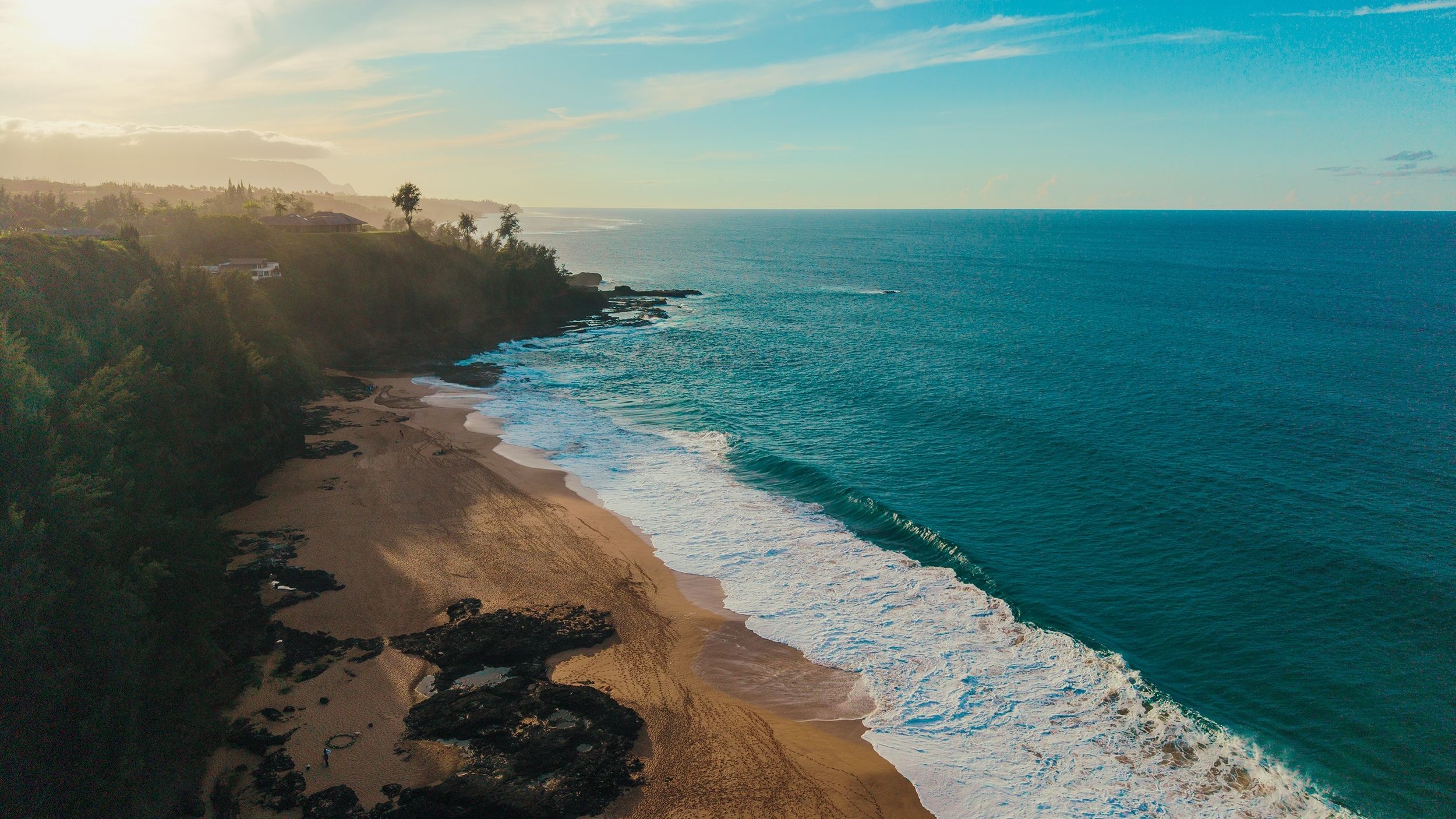
The sunny side of Kauai is the South Shore (Poipu) and the West Side (Waimea), which receive significantly less rain than the lush North Shore, while the East Side (Kapaa) offers a breezy, central middle ground.
The Short Answer: Where is the Sunny Side of Kauai?
Kauai is 33 miles across, and the rainfall swing from one end to the other is enormous. Waimea on the West Side collects roughly 20 inches of rain a year, which is drier than Los Angeles. Poipu on the South Shore gets 30 to 40 inches. Kapaa on the East Side sits at about 50 inches. Princeville and Hanalei on the North Shore take around 85 inches.
Same island. Same day. Completely different sky.
That is why your weather app is lying to you. It pulls one forecast for "Kauai," attaches a rain cloud icon, and ruins your week from 3,000 miles away. The icon is not wrong, exactly. It is just describing somewhere you do not have to be.
Understanding Kauai's Microclimates
The whole system comes down to one mountain and one wind. Trade winds blow in from the northeast almost every day of the year, carrying wet ocean air. That air slams into Kauai's mountainous interior, gets pushed upward, cools, and dumps its moisture on the north and east slopes. By the time whatever is left crosses over to the south and west, it has nothing to give.
Meteorologists call the dry half a rain shadow. Locals call it "the sunny side."
South Shore (Poipu): Dry and Sunny
Poipu is the reliable bet when you need blue sky on a specific afternoon. It sits on the leeward side of the mountains, so it clears out fast and stays warm. Keep going west toward Waimea and Polihale and it gets drier still, with red dirt, cactus, and the kind of sun that requires a hat. The trade-off is that "dry" also means less green and, in summer, less breeze.
North Shore (Princeville & Hanalei): Lush and Rainy
Everything you pictured when you booked this trip lives on the North Shore: emerald cliffs, taro fields, waterfalls threading down the Napali coast. All of it exists because of the rain. Hanalei is beautiful in direct proportion to how wet it is. Visit in February and you may get a genuinely soaked afternoon. Visit in July and you will get sun with a passing shower attached.
East Side (Kapaa): The Breezy Middle Ground
Kapaa and the Royal Coconut Coast land right in between. Enough rain to keep everything green, not enough to keep you inside. The east side catches the trade winds first, which is the part most visitors do not know to appreciate until they feel it: the breeze here runs steady off the water, so afternoons stay comfortable instead of heavy.
Kauai Weather by Month: Temperature & Seasons
Kauai's temperature barely moves. The difference between the coldest month and the warmest month is about six degrees, and it has never snowed at sea level. What changes across the year is rainfall, not warmth.
Figures reflect coastal East Side averages (Lihue / Kapaʻa). November through March is the wetter winter season; April through October is the drier summer season.
Two things worth reading off that table. Ocean temperatures track close behind air temperature, so swimming is comfortable in every month listed. And "wet season" does not mean a washout. January, the wettest month on the East Side, still averages roughly five inches of rain spread across 31 days.
Embracing "Liquid Sunshine" (And Mt. Waialeale)
Mt. Waialeale sits in the center of the island and is one of the wettest spots on Earth, absorbing something on the order of 450 inches of rain in an average year. It is the engine of everything you came here to look at. No Waialeale, no Wailua Falls, no green cathedral walls above Hanalei, no Garden Isle.
You will almost never see the summit. It keeps its own cloud.
Down at the coast, what you get instead are trade-wind showers: five minutes of warm rain, often with the sun still out, then gone. Locals call it liquid sunshine, and nobody runs for cover. You keep your drink, you wait, and you usually get a rainbow out of the deal. Kauai produces more rainbows than almost anywhere on the planet for exactly this reason.
The visitors who have a bad weather week are the ones who cancel the whole day over a ten-minute shower.
Why Kapaa is Your Smart Weather Basecamp
Staying in Kapaa gives you something a North Shore or South Shore hotel cannot: options.
Kuhio Highway (Highway 56) runs right past the Coconut Coast. If a shower parks over the East Side, you get in the car and drive out of it. Twenty to thirty minutes south puts you in Poipu under clear sky. Keep going west toward Waimea and you will find sun almost regardless of what the island is doing behind you. Feeling ambitious in the other direction, Hanalei is about 45 minutes north. From a South Shore resort, chasing weather means committing to a two-hour round trip. From here, it is an errand.
Then there is the breeze. Kauai Shores Hotel sits beachfront in Kapaa, directly in the path of the trade winds, which is why the property stays cool while the far South and West Side can turn stifling in August. Retro lounge chairs, a pool that catches the morning light, the sound of the water forty steps away, and air that keeps moving.
Rain on Kauai is the price of admission for the waterfalls. Kapaa just gives you the shortest walk to the exit.
Don't let weather apps dictate your vacation. Book your stay at Kauai Shores Hotel in Kapaa, where the trade winds keep things cool and you are always just a short drive away from the sunniest beaches on the island.
Frequently Asked Questions
What is the rainiest month in Kauai?
January is the rainiest month, averaging about five inches on the East Side, with December and February close behind. November through March is the wetter winter stretch across the whole island.
Does it rain every day in Kauai?
It rains somewhere on Kauai nearly every day, but rarely all day and rarely everywhere at once. Most coastal rain arrives as brief trade-wind showers that pass in minutes.
What is the best month to visit Kauai for good weather?
June and July deliver the driest, warmest coastal weather of the year, with June averaging around an inch of rain on the East Side. April, May, September, and October are close behind and bring smaller crowds.
Can you swim in Kauai in the winter?
Yes. Ocean temperatures stay in the high 70s year-round. Winter does bring larger surf to the North Shore, so check conditions and swim at lifeguarded beaches. That is when the calmer South and East Side beaches become the better call.
Originally published on 8/1/2026. Last updated on 8/1/2026
