


The Napali Coast you've seen from a helicopter and the Napali Coast you'll meet on foot are two different places. From the air, it's emerald cliffs dropping into turquoise water. On the ground, it's a slick red-dirt trail, knee-deep stream crossings, and a 300-foot waterfall you have to earn over eight miles of mud, roots, and humidity. Most visitors who attempt Hanakāpīʻai Falls have no idea what they signed up for. This guide fixes that.
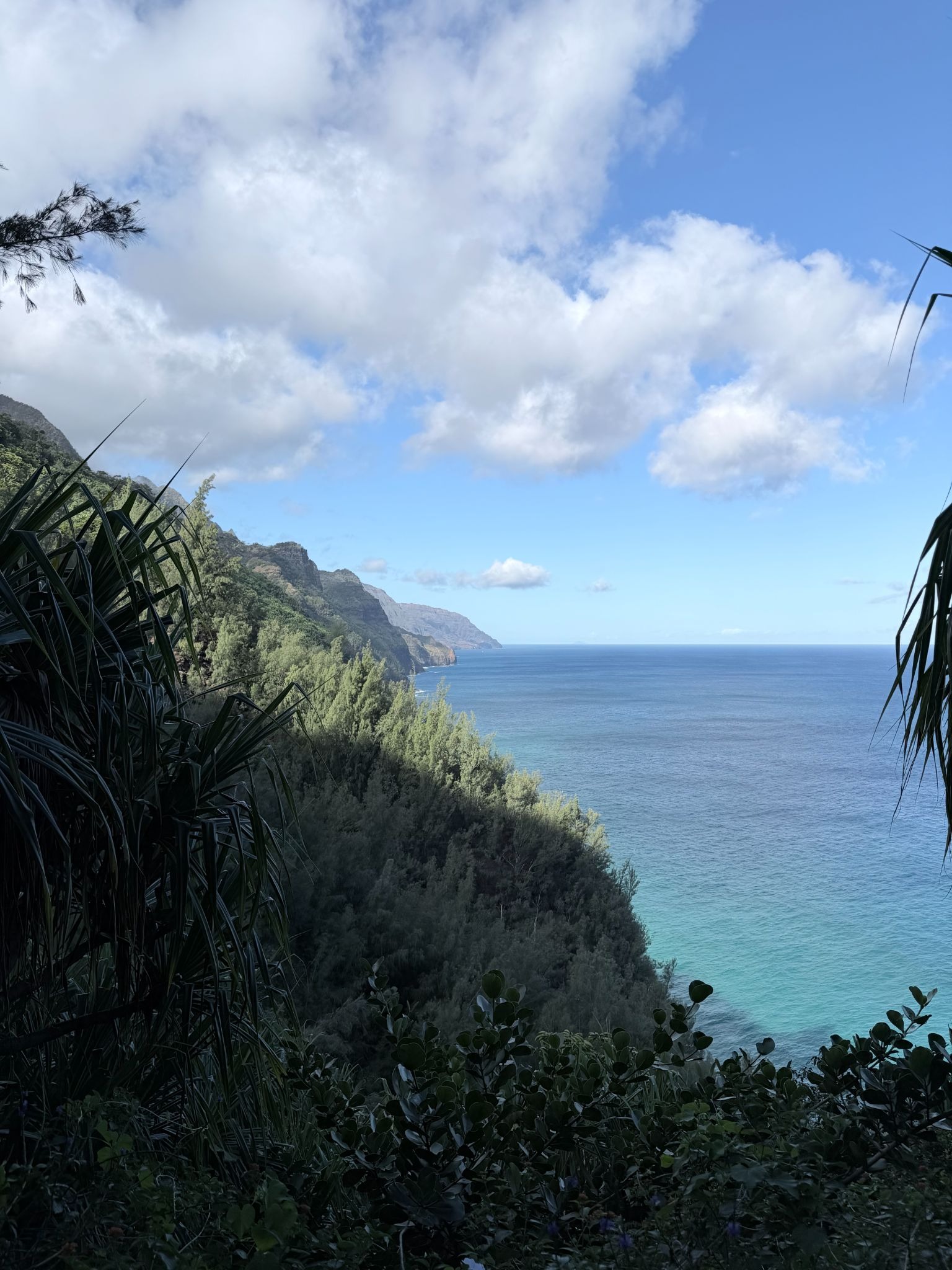
The Magic (and Mud) of the Kalalau Trail
The Kalalau Trail runs 11 miles along Kauai's north shore from Ke'e Beach to Kalalau Beach, hugging cliffs that rise 4,000 feet straight out of the Pacific. The full trail requires an overnight camping permit. Day-hikers get the first two miles, which end at Hanakāpīʻai Beach. The two miles after that, inland, deliver you to Hanakāpīʻai Falls.
Eight miles round-trip. Sounds modest. It isn't.
The trail gains and loses around 800 feet of elevation in the first two miles alone. The footing is volcanic rock buried in red clay that turns to grease the moment it rains, which on this part of Kauai is roughly every other afternoon. You will be muddy. Your shoes will be ruined. Embrace it.
The Journey to Hanakāpīʻai Falls: What to Actually Expect
Plan for six to eight hours on the trail. That accounts for two slow miles up the coastal cliff, two miles inland through the jungle, the waterfall itself, and the return trip on legs that have stopped cooperating.
Mile 1–2: Reaching Hanakāpīʻai Beach (And Why You Shouldn't Swim)
The first half-mile climbs hard. Stop at the overlook around 0.5 miles in, catch your breath, and take the photo. You'll see why the Napali Coast Kauai gets the magazine spreads. From there, the trail rolls along the cliffside, dipping in and out of small valleys, until it drops you onto Hanakāpīʻai Beach.
Do not swim here. This is not a suggestion.
Hanakāpīʻai Beach has killed dozens of people. The currents at this beach pull straight out into open ocean with no protective reef. There is no lifeguard. There is no rescue. People who get pulled out do not come back. Stand on the sand, eat a snack, take pictures, and turn inland.
Mile 3–4: The Jungle Trek and River Crossings

The inland route to Hanakāpīʻai Falls is where casual hikers wash out. The trail follows Hanakāpīʻai Stream up a narrow valley, crossing the water multiple times. In dry conditions, the crossings are ankle-to-shin deep on slick boulders. After rain, they become impassable, and the stream can rise from a trickle to a chest-high torrent in minutes.
Flash floods are the real danger on this section. If it starts raining hard upstream while you're in the valley, you can be trapped, or worse. Rule of thumb: if the water is moving fast or has turned brown, do not cross. Wait it out or turn around.
The reward, assuming the weather cooperates, is roughly 300 feet of waterfall thundering into a deep pool inside an amphitheater of black basalt. The mist will soak you. The pool is cold. Falling rocks from the cliff above are a real, documented hazard. Don't swim directly under the falls.
The Logistics: Haena State Park Permits and Shuttles
You cannot just drive up and park. Haena State Park caps daily visitors at 900 and requires advanced reservations through gohaena.com, which opens bookings exactly 30 days in advance. There are no same-day sales, and there's no cell signal at the park, so everything must be locked in before you leave Kapaa.
Book at midnight Hawaii Standard Time, 30 days out, the second your window opens. Peak summer slots vanish in minutes.
Post-Hike Recovery: Stopping in Hanalei Town
Stop in Hanalei on the drive back. Your body will demand it, and Hanalei is the right size of town to absorb a tired, muddy hiker without judgment.
Tahiti Nui has been the move since 1963. It's open Sunday through Friday, noon to 9 PM, closed Saturdays. No reservations, just put your name down and wait at the bar. Mai tais are the house specialty, and the kalua pork is what your legs are asking for. Live music most nights.
If Tahiti Nui has a line or it's Saturday, the food trucks on the east end of town handle the overflow. Fish tacos, poke bowls, plate lunches. Cash usually moves faster than cards.
Why Kapaa is Your Smart Basecamp for Napali Coast Hikes
Kapaa sits at the geographic midpoint of Kauai's east side, about 40 minutes south of Hanalei on Highway 56. That drive is the entire reason Kapaa beats Princeville as a launch point for the Napali Coast hike.
The math: a Princeville room runs three to four times the nightly rate of a comparable Kapaa room. You save those dollars not on the morning of your hike, you save them on every other night of your trip. Princeville only makes sense if you're hiking the Napali Coast every single day.
From Kauai Shores, you wake up early, grab coffee a block over at Java Kai or Small Town Coffee, point the rental car north on Highway 56, and you're at the Waipā Park & Ride in under an hour. You're on the trail before the heat builds.
Coming back, you eat in Hanalei, drive south, and you're rinsing off in an oceanfront pool by mid-afternoon. The North Shore is something you visit. Kapaa is somewhere you live for a week.
If you want to hike the Waimea Canyon the next day, you can without relocating.
After eight miles through the jungle, your legs are going to be toast. Book a retro-cool room at Kauai Shores Hotel in Kapaa, where you can soak in our oceanfront pool and swap hiking stories over fish tacos at Lava Lava Beach Club without having to walk another step.
FAQs
How long does it take to hike to Hanakāpīʻai Falls?
Plan for six to eight hours round-trip for the full 8-mile out-and-back from the Ke'e Beach trailhead. Faster hikers in dry conditions can do it in five. After rain, the river crossings can add hours or close the inland section entirely.
Do I need a permit to hike to Hanakāpīʻai Falls?
You need a Haena State Park reservation, which is different from a Kalalau Trail camping permit. Day-hikers going as far as Hanakāpīʻai Falls only need the park reservation, booked through gohaena.com 30 days in advance. The overnight Kalalau camping permit is a separate, harder-to-get permit through the Hawaii State Parks camping system.
What should I wear and bring?
Closed-toe trail shoes you don't care about, not white sneakers. Two liters of water minimum. Snacks with salt. A dry bag for your phone. Rain shell. Headlamp if you start late. Reef-safe sunscreen. Mosquito repellent for the inland valley.
Can you see the Napali Coast without hiking?
Yes. Catamaran tours out of Port Allen on the south shore cruise the full coast in calm summer water. Helicopter tours from Lihue do a full island loop in about 50 minutes. Both let you see the parts of the Napali Coast Kauai that no trail reaches. The hike gives you one valley. The boat and helicopter give you all of them.
Originally published on 5/15/2026. Last updated on 5/15/2026
