


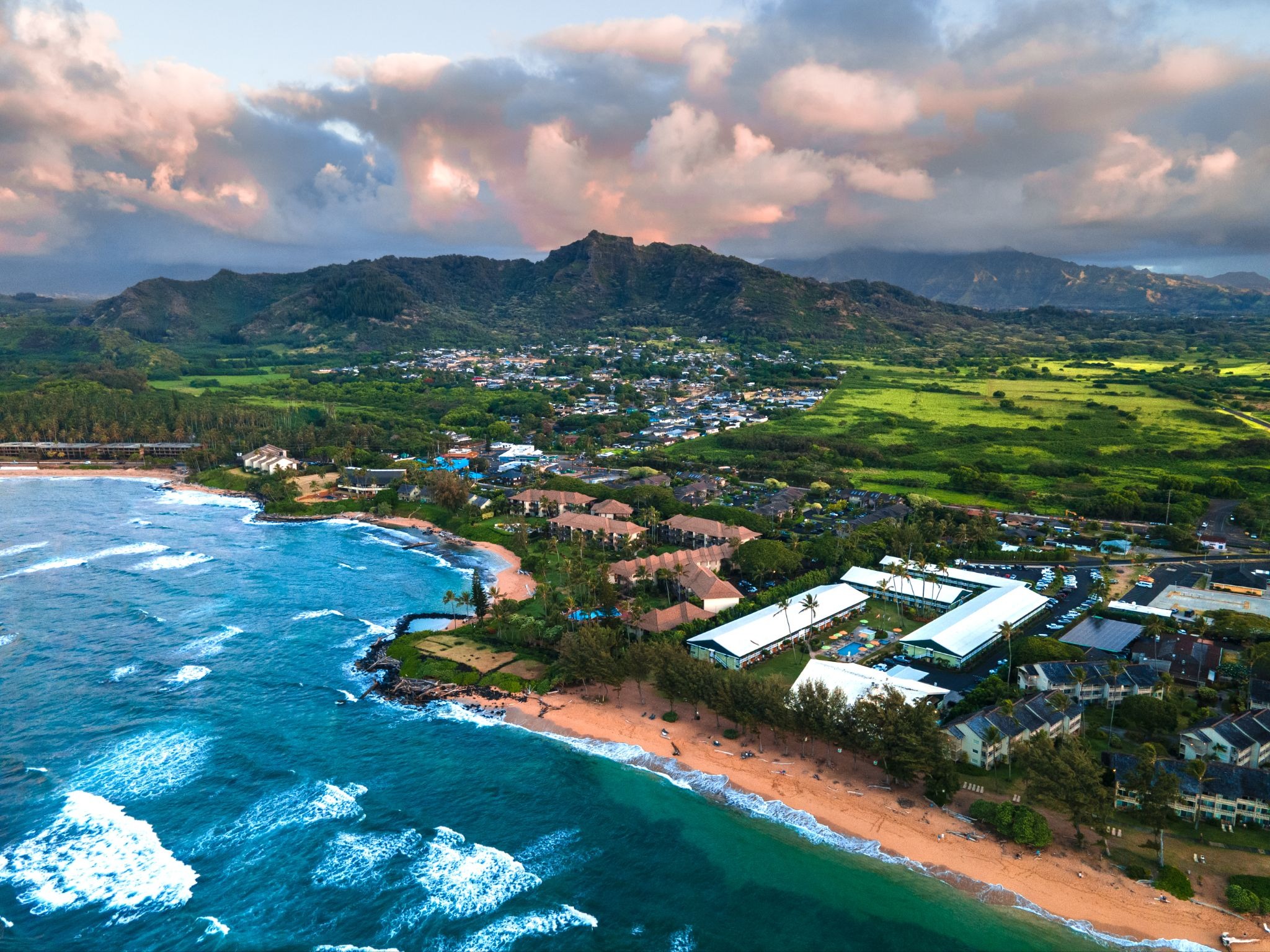
You can see Nounou Mountain from the Kauai Shores Hotel pool deck. Most mornings, the Sleeping Giant catches the first orange light before anyone on the Royal Coconut Coast has finished their coffee. That silhouette, a massive figure lying flat on his back against the sky, is the most recognizable ridgeline in eastern Kauai. And the Sleeping Giant Trail that runs to his summit is one of the best hikes in Kapaa.
Why Nounou Mountain is Kapaa's Most Iconic Landmark
Hawaiian legend says a giant named Puni helped the people of Wailua build an enormous imu (earth oven) for a feast. He ate so much he lay down on the ridge and never woke up. His body became the mountain. You can make out the chin, the chest, and the forehead from almost anywhere in Kapaa. Standing at the Kauai Shores Hotel, you're looking directly at his chest, which is also where most hikers end up: a picnic shelter perched on the giant's ribcage, with the Wailua River winding below and, on a clear day, the cloud-wrapped crater of Mount Waialeale in the distance.
At 1,241 feet, Nounou Mountain isn't a backcountry expedition. You knock it out before lunch and still burn off the loco moco.
Choosing Your Route: East Trail vs. West Trail
Two main trails climb Nounou Mountain, plus a third connector (Kuamoʻo) that merges with the West Trail higher up. The East and West start on opposite sides and converge near the top.
The East Trail (Haleʻīlio Road): The Scenic Switchback Route
Distance: ~4 miles round trip | Elevation Gain: ~1200 feet | Time: 2 to 2.5 hours
The East Trail starts off Haleʻīlio Road in the Wailua Houselots, facing the ocean. A small dirt parking lot sits at the trailhead. No fee, no permit, no restrooms. Get there early for sunrise; the lot fills by 7 a.m.
The first stretch winds through shaded ironwood and wild guava, the air cool and thick with moisture. After a half mile, switchbacks begin and the canopy opens to views of the Kapaa coastline, Wailua Bay, and Kalepa Ridge. Your calves will know they're working.
This is the sunrise trail. The east-facing slope catches morning light perfectly, and by the time you reach the ridgeline, the ocean is glowing. If you only hike Nounou once, do the East Trail at dawn.
The West Trail (Lokelani Road): The Pine Forest Shortcut
Distance: ~3 miles round trip (from Lokelani Road) | Elevation Gain: ~800 feet | Time: 1.5 to 2 hours
The West Trail begins off Lokelani Road in the Wailua Homesteads, with additional access on Crossley Road and Kamalu Road. Parking is easier here: three small lots instead of one.
The character is completely different. You start walking between residential homes (keep it quiet at dawn), and then the forest swallows you. The highlight is a cathedral-like tunnel of Cook Pine trees, planted by the Civilian Conservation Corps in the 1930s. Trunks rise straight up like columns, light filtering through in pale green shafts.
Shorter, less steep, more shaded. The better option for afternoon hikes or younger kids who need a trail that forgives tired legs. Both trails meet at a junction near the giant's chest, so the final push is the same either way.
What to Expect on the Hike
Kauai's red dirt is beautiful until it gets wet. Then it turns to grease. Do not hike Nounou Mountain after heavy rain; the clay soil becomes dangerously slick. Check the forecast and give wet trails a few hours to dry.
The smell hits you before the views do. Strawberry guava grows along both trails, dropping ripe fruit on the path in summer. Silk oak and eucalyptus crowd the middle elevations. Higher up, vegetation thins and the trail gets rocky, with exposed roots and spots where you'll place hands on red clay for balance. The reward is the picnic shelter on the giant's chest: covered tables, a bench with a view from the Wailua River valley to the Pacific, and enough space to sit and let your heart rate drop.
The Scramble to the Summit (For the Brave)
Past the picnic shelter, the trail narrows. A lot. The path to the giant's forehead involves a rock scramble along a narrow ridge with steep drop-offs on both sides. Exposed roots, loose rock, hundred-foot drops. This is not a maintained trail. Go only if conditions are completely dry and you're comfortable with exposure. Skip it with young children or in the wind.
The view from the true summit is 360 degrees: Līhuʻe to the south, the Makaleha Mountains west, the Pacific east, and the Royal Coconut Coast spread out directly below. Worth the sweat equity.
Post-Hike Refuel: Best Kapaa Eats
You earned this part.
Java Kai (4-1384 Kuhio Hwy, Kapaa) is the move for post-hike coffee. They roast beans in-house, and the line out the door every morning tells you everything. Get the macadamia nut latte with pistachio milk and a fresh-baked pop tart.
Pono Market (4-1300 Kuhio Hwy, Kapaa) is where you go for real food. Counter-service Hawaiian plate lunches and poke. The spicy ahi is famous for a reason. Get there before 1 p.m. or the popular items sell out.
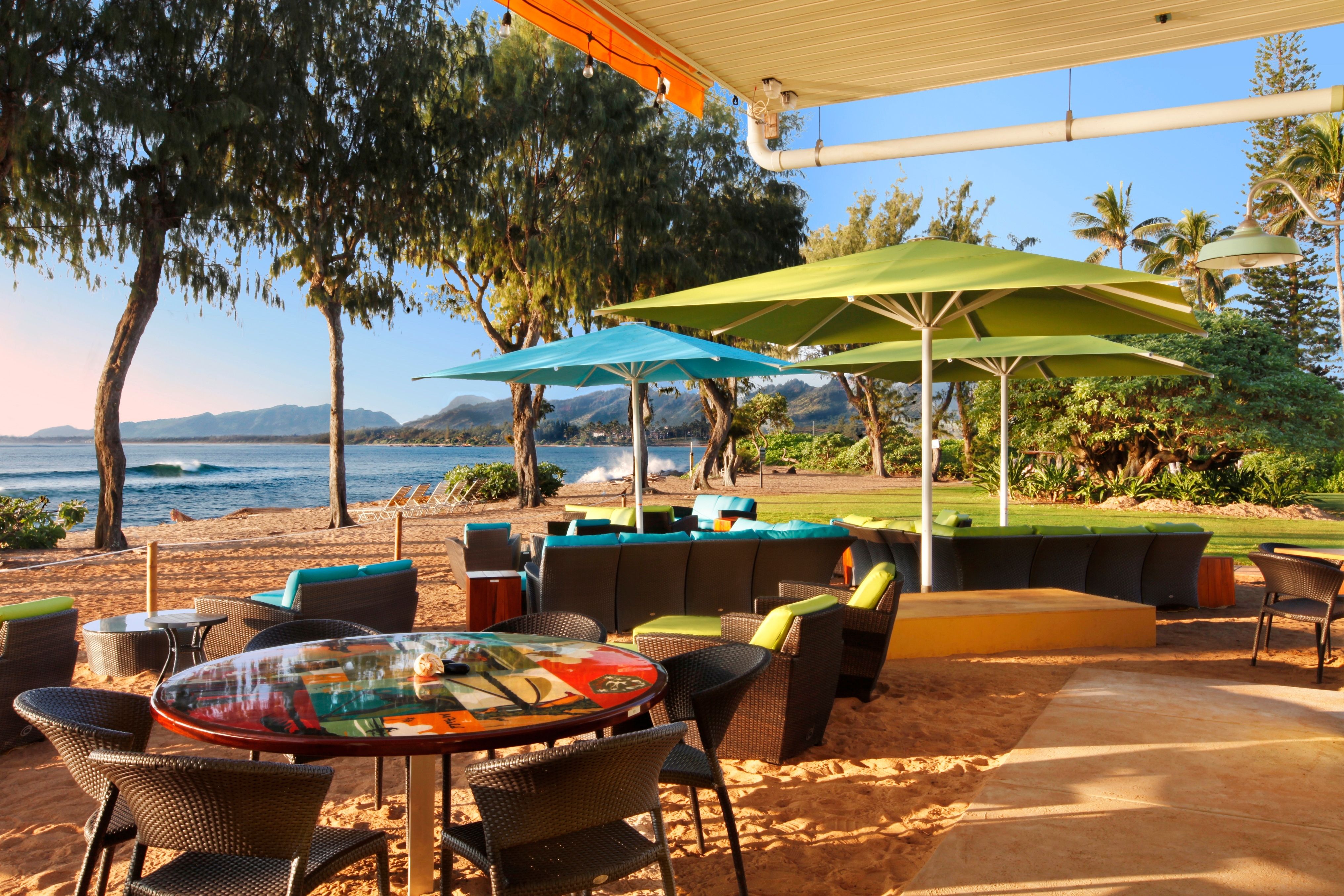
Lava Lava Beach Club, right at Kauai Shores Hotel, is the post-hike reward if you want to plant yourself beachfront with a cold drink. Toes in the sand, mai tai in hand, Nounou Mountain in the background.
Why Kauai Shores is Your Hiking Basecamp
Kauai Shores Hotel sits beachfront in Kapaa, less than a 10-minute drive from both Sleeping Giant trailheads. Roll out of bed at 5:30 a.m., drive to Haleʻīlio Road, summit before the heat kicks in, and be back at the hotel pool by 9. The pool and hot tub handle sore legs. The retro-cool property (1970s tropical colors, funky lounge chairs, the kind of place where strangers become friends by day two) pairs well with post-adventure recovery.
Legs burning? The oceanfront pool at Kauai Shores is waiting. Book your hiker's paradise today.
Frequently Asked Questions (FAQs)
How long does it take to hike the Sleeping Giant Trail?
The East Trail takes about 2 to 2.5 hours round trip. The West Trail is faster, around 1.5 to 2 hours. Add 20 to 30 minutes if you attempt the summit scramble past the picnic shelter.
Is the Sleeping Giant hike kid-friendly?
The main trail to the picnic shelter is manageable for active kids ages 6 and up, especially on the West Trail. The summit scramble beyond the shelter is not appropriate for children.
Do I need a permit or fee to hike Nounou Mountain?
No. The Sleeping Giant Trail in the Nounou Forest Reserve is free, with no permit required. Parking is also free at both the East (Haleʻīlio Road) and West (Lokelani Road) trailheads.
What should I bring on the Sleeping Giant hike?
Water (at least a liter per person), sunscreen, sturdy shoes with grip (not slippers), and a headlamp if you're starting before dawn. Bug spray helps on the lower forest sections.
When is the best time to hike the Sleeping Giant?
Early morning, ideally 30 minutes before sunrise. Cooler air, incredible light on the East Trail. Avoid hiking after heavy rain; the red clay gets extremely slippery.
Originally published on 3/15/2026. Last updated on 4/14/2026
